

“It’s like Netflix. But for NASA. Can you help us build that with WordPress?”
NASA+ was an opportunity to leverage the power of WordPress as an application framework.
In 2022, NASA’s Office of Communications recognized the trends for video content delivery and sought to begin moving away from its NASA TV cable channel and towards a streaming solution offering both on-demand and live video that was natively available on the web, mobile devices, and set top box platforms such as Apple TV and Roku. Lone Rock Point supported NASA with architecting and implementing new service known as NASA+.
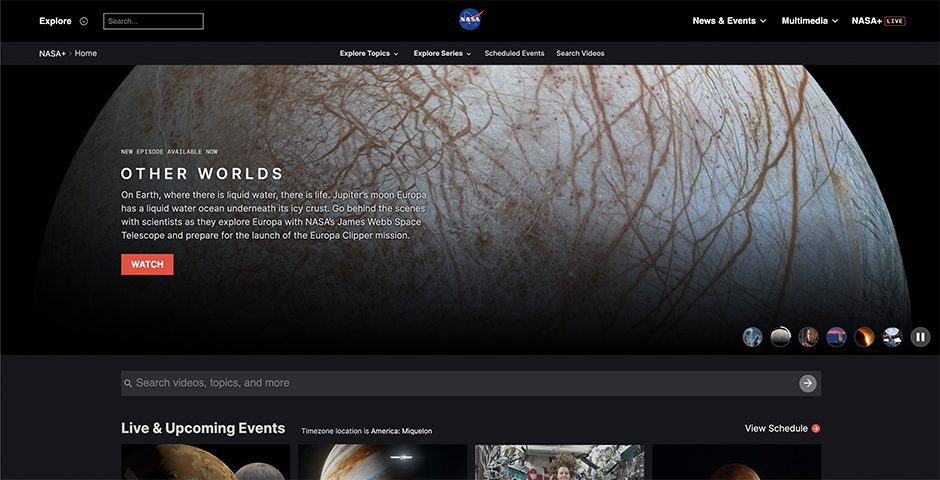
Eight months into the software development of NASA’s updated flagship website design on WordPress, NASA began breaking ground on the implementation on a second digital modernization initiative and sought to reuse much of the strategy and processes of the flagship WordPress initiative. Initially, an approach to build a Netflix-like service named NASA+ on WordPress as part of the solution seemed like a questionable choice, given that WordPress is not typically associated with video streaming, and there were other more specialized solutions available.
However, once they shared the high-level components of the project, the decision started to make sense when considering the three main project requirements.
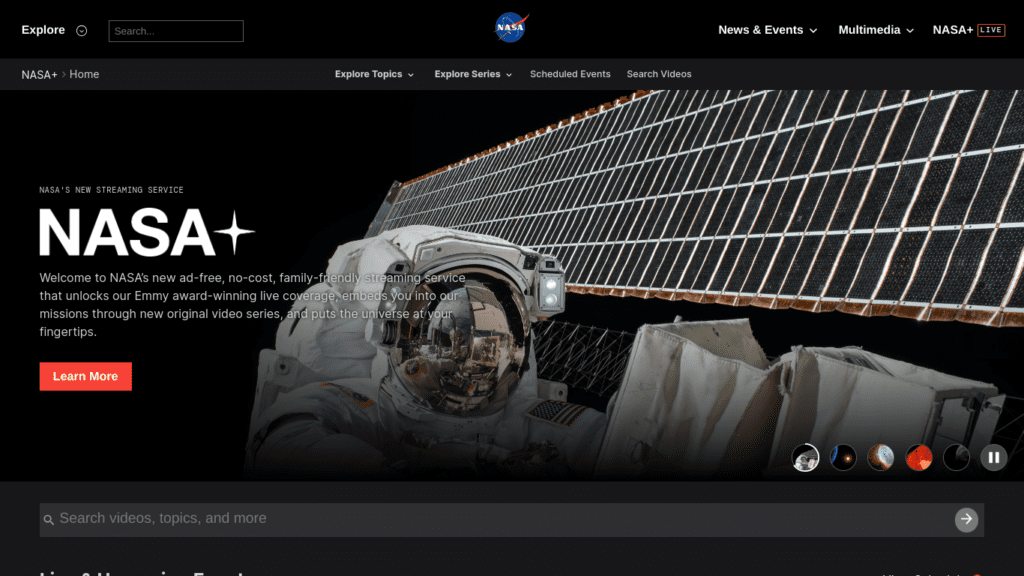
Web experience at plus.nasa.gov
The first was creating a website front end for users to access, something WordPress is adept at. It allows for the building, publishing, and managing of content, which is then presented to site visitors.
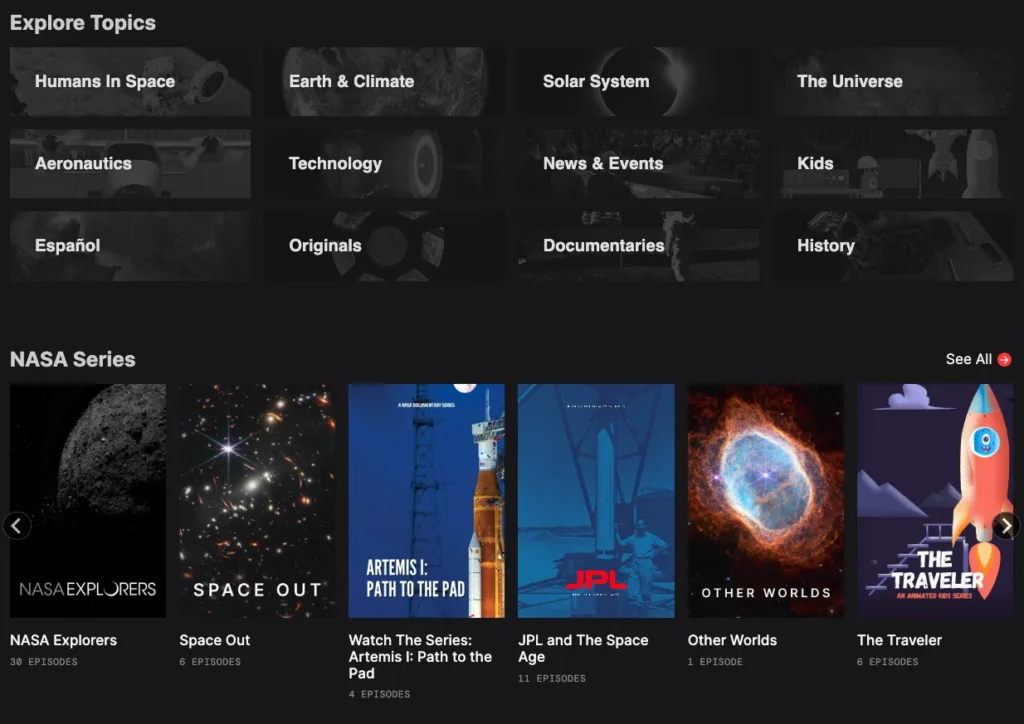
Video management control room
The second requirement was the creation of a control room for video management. This room would be used by NASA+ producers to organize videos into playlists, similar to how platforms like Netflix and Hulu categorize their content, such as dramas, comedies, or documentaries. NASA envisioned categories like launches, landings, spacewalks, and aeronautics. They also wanted the capacity to unpublish videos and replace them with more relevant content, a task aligning with WordPress’s strengths
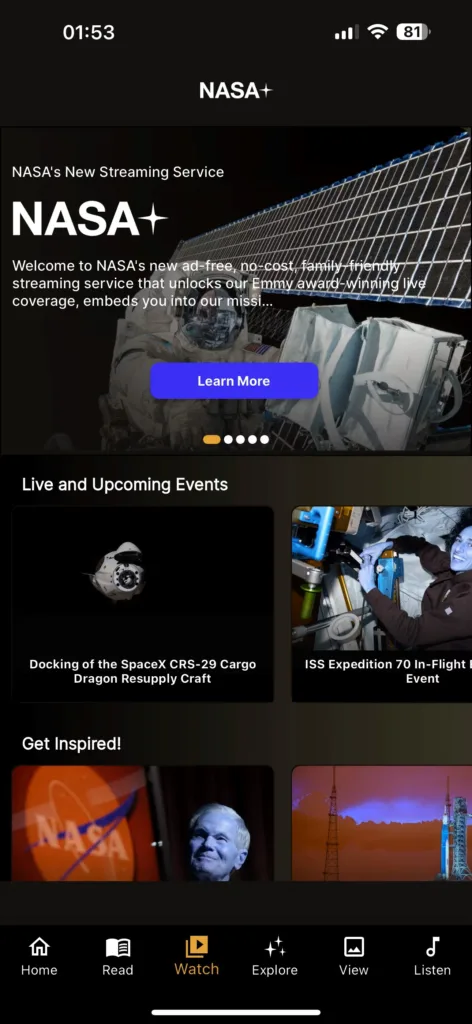
NASA+ on every platform
The third requirement was to address the distributed nature of set-top boxes and apps. With numerous platforms and electronic devices like Apple TV, Roku, Android, Vizio, LG, Samsung, and Sony, each with its own app store and standards, NASA needed a centralized hub. The vision was to make NASA video content available for app development teams to build upon and utilize on all platforms. NASA’s limited resources meant it couldn’t build applications for every existing platform or consumer electronics device. This vision foresaw a scenario where information would be available in an API, allowing app developers to utilize it and encouraging participatory software development. The REST API of WordPress was an attractive choice, serving as a hub and spoke for apps to access content in a well documented format. App development team could then build solutions for their platform access the video information stored in the WordPress database via REST API.
Putting WordPress at the center of the NASA+ solution
One of the significant decisions made during the development of NASA+ centered on the storage and delivery of video content. It was soon evident that using the NASA media library as a storage site for MP4 videos or APIs, and expecting it to function as a Netflix for NASA content, was unfeasible. Even an enterprise-grade platform like WordPress VIP, which is primarily designed for delivering pages and views to end users, was not built to perform as a video streaming service. The ideal solution needed to have adaptive bitrate adjustments to prevent lagging or buffering that could mar the viewing experience. Identifying a cloud storage location for NASA’s video content with a video streaming optimized CDN in front of the storage location unlocked the role of WordPress.
The solution lay in an architecture that placed WordPress in the center, with the video files, caption files, poster images, and other metadata stored in a Media Asset Management system. WordPress used its REST API to pull all the necessary information from this system and allowed content managers to augment and improve this data so that it is user friendly and presentable. This architecture facilitated seamless information flow and content management, ensuring that the content was accessible across a variety of platforms – Roku, iOS, Android, tvOS, and others – via the WordPress REST API.
Structured data
The final key decision revolved around the structure of content on NASA+. Unlike the main NASA website, NASA+ was not a Gutenberg Project. This meant that the site was not designed for publishing news releases or creating long-form content. Instead, it was primarily designed to manage structured data, such as existing videos and single post pages. WordPress’s built-in tagging was utilized, and playlists were created using different kinds of taxonomies. This approach made NASA+ closer to a traditional WordPress development, with heavy use of custom post types and custom taxonomies. It also meant that there were fewer needs for content styling tasks such as making text bold or adding hyperlinks, simplifying the work for the content management team.